
Access San Francisco Released Inmates
Released inmate records in San Francisco work differently than most California cities because San Francisco is both a city and a county. The San Francisco Sheriff runs the jail and tracks all booking and release data. SFPD handles arrests and keeps its own police records. The sheriff's "Find a Person in Jail" tool lets you look up current and recently released inmates for free. You can also submit public records requests through the SFPD portal. This page explains how to find released inmate records in San Francisco, where to search, and what California law says about public access to this data.
San Francisco Released Inmates Quick Facts
San Francisco Sheriff Jail Records
San Francisco is a consolidated city-county. That means the San Francisco County Sheriff handles all jail operations within the city. There is no separate county jail and city jail. The San Francisco County Jail system includes facilities at the Hall of Justice and County Jail #5 in San Bruno. When SFPD officers arrest someone, that person is booked at a San Francisco Sheriff facility. All custody and release data stays in the sheriff's system.
The San Francisco Sheriff offers an inmate search at sfsheriff.com/find-person-jail. The tool is free and open to anyone. Search by name to check if a person is in custody or has been released. Results show charges, booking date, and status. Released inmates have a release date listed. The system covers all bookings from SFPD arrests and any other law enforcement action within San Francisco. Since the city and county are the same, one search covers everything in San Francisco.
The sheriff's main number is (415) 553-1430. Call for help with older San Francisco released inmate records or questions about the jail system.
Searching San Francisco Inmate Records
Go to the sheriff's inmate search page. Type the last name and first name. The tool returns matching records from San Francisco jails. Each entry shows the booking number, charges, court date, and custody status. If someone has been released, you see when they left. The tool covers current inmates and recent releases.
Because San Francisco is both the city and the county, you do not need to search two different systems. One tool handles it all. That is different from cities like Los Angeles or San Diego, where you search a separate county system. In San Francisco, the city police and the county sheriff are part of the same government structure. This makes tracking released inmates simpler here than in most places in California.
Note: Records for released inmates stay online for a limited period. For older San Francisco records, contact the sheriff's office directly.
SFPD Records in San Francisco
The San Francisco Police Department keeps arrest reports, incident logs, and investigation files. These records are separate from the jail booking data. You can request SFPD records through their portal at sanfranciscopd.govqa.us. The records phone number is (415) 837-7000. The office address is 1245 3rd St, San Francisco 94158.
Under the California Public Records Act, SFPD must respond to requests within 10 calendar days. A 14-day extension is allowed for unusual circumstances. The police records cover the arrest side of a case in San Francisco. If you need the booking and release information for a released inmate, use the sheriff's tool. If you want the police report that led to the arrest, go through SFPD's portal. For a complete view of a released inmate case in San Francisco, use both. The police file tells you what happened. The jail record tells you when they got out.
California Law on San Francisco Releases
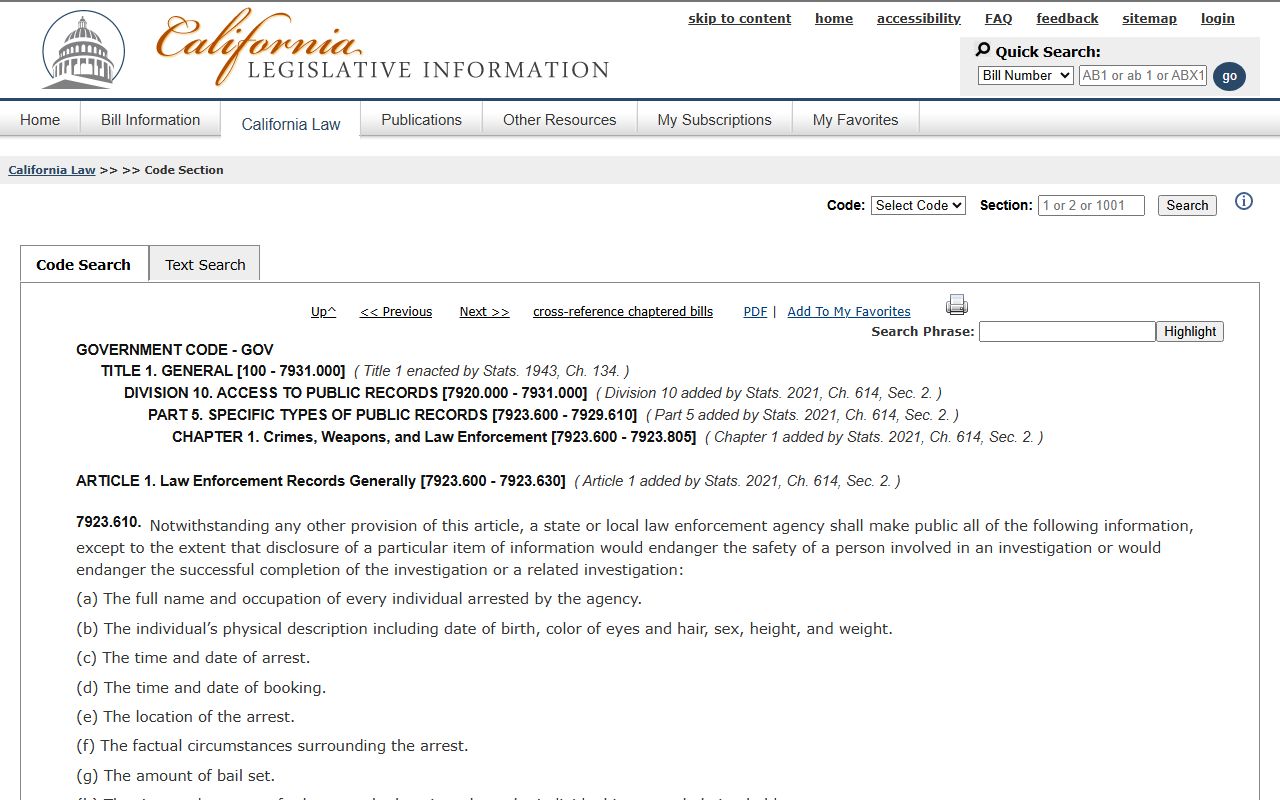
Government Code 7923.610 makes arrest and booking data public across California. This statute covers SFPD and the San Francisco Sheriff. Agencies must share the full name, date of birth, arrest time, booking time, charges, bail amount, and how a person was released. The only exception is when sharing a detail would harm an investigation or put someone at risk. This law went into effect on January 1, 2023, and applies to every arrest and release recorded in San Francisco.
For state prison parolees returning to San Francisco, Penal Code 3003 requires CDCR to notify local law enforcement with detailed information. This includes names, physical descriptions, tattoos, scars, the offense that led to prison, and the planned living address. Parolees must return to the county where they lived before being sentenced. Since San Francisco is both a city and county, the police and sheriff both receive this data. Each released inmate gets $200 in gate money when leaving a state facility. San Francisco gets fewer returning parolees than larger counties like Los Angeles, but the notification rules are the same.
VINE Alerts in San Francisco
Use the VINE system to track custody changes for inmates in San Francisco. Registration is free. You choose phone, email, or text alerts. VINE works 24 hours a day in over 200 languages. When someone is released from a San Francisco jail, VINE sends a notification right away to everyone who signed up for that inmate.
Call 1-877-411-5588 to register by phone. Visit vinelink.com to sign up online. VINE covers about 2,900 facilities in 48 states, including the San Francisco County Jail and California state prisons. It is the fastest way to know when a released inmate leaves custody in San Francisco. Anyone can register, though victims and families are the most common users.
San Francisco Released Inmate Tools
The screenshot below shows the text of Government Code 7923.610 on the California Legislature website. This is the state law that requires San Francisco agencies to make arrest and released inmate booking data public.
You can also search for state prison releases connected to San Francisco using the CIRIS database from CDCR. The statewide tool covers people released from California state prisons, which is different from the county jail records that the San Francisco Sheriff maintains.
Nearby Cities With Records
If you are looking for a released inmate who may have been arrested in a nearby city, check these neighboring areas that have their own records pages.