
Search California Released Inmates
California tracks released inmates through state and county agencies. The California Department of Corrections and Rehabilitation runs the CIRIS database for state prison records. County sheriff offices keep booking and release data for local jails across all 58 California counties. You can look up released inmate records for free with online tools from CDCR, county sheriff sites, and the VINE notification system. California law requires agencies to share arrest and booking data with the public under Government Code 7923.610. This guide covers how to find released inmate records in California and what each agency provides.
California Released Inmates Quick Facts
California CIRIS Inmate Database
CDCR runs the California Incarcerated Records and Information Search. Most people call it CIRIS. The tool is free. Anyone can use it to look up a person who has been in a California state prison. Search results show the inmate's name, CDCR number, and age. You also get the current facility location, commitment counties, admission date, and Board of Parole Hearing dates. CIRIS covers both current inmates and released inmates who served time in California state prisons. It does not cover county jail bookings, which are handled by each county sheriff in California.
The CIRIS portal is the main way to search for California released inmates from state prison. You can access it at ciris.mt.cdcr.ca.gov, which is run by the California Department of Corrections and Rehabilitation.
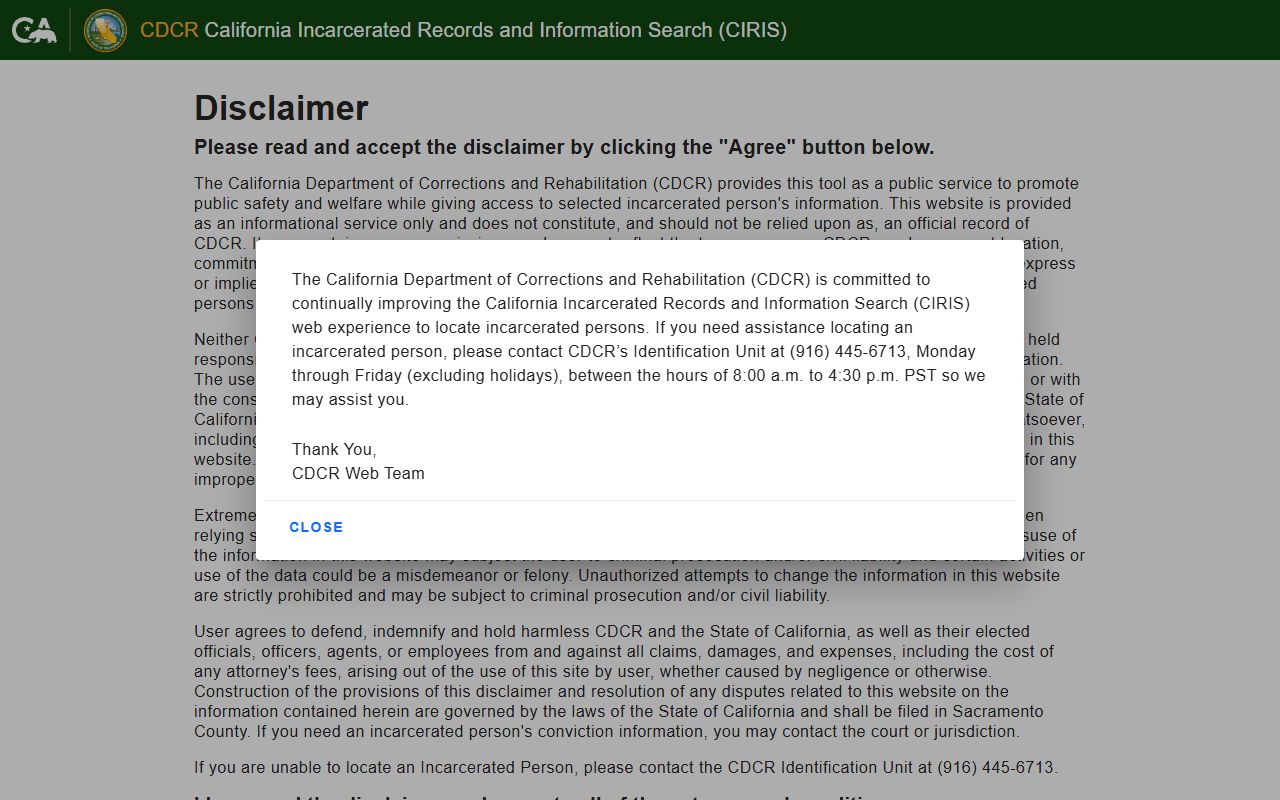
Search by name or CDCR number. The system runs all day and night. If you need help with a CIRIS search for a California released inmate, call the CDCR Identification Unit at (916) 445-6713. Staff are there Monday through Friday, 8 a.m. to 4:30 p.m. Pacific Time. For general CDCR questions, visit the CDCR contact directory or call (916) 324-7308. You can also submit a formal records request through the CDCR Public Records Portal if you need documents beyond what CIRIS shows.
Note: CIRIS tracks state prison inmates only, not people held in California county jails.
California Released Inmate Records
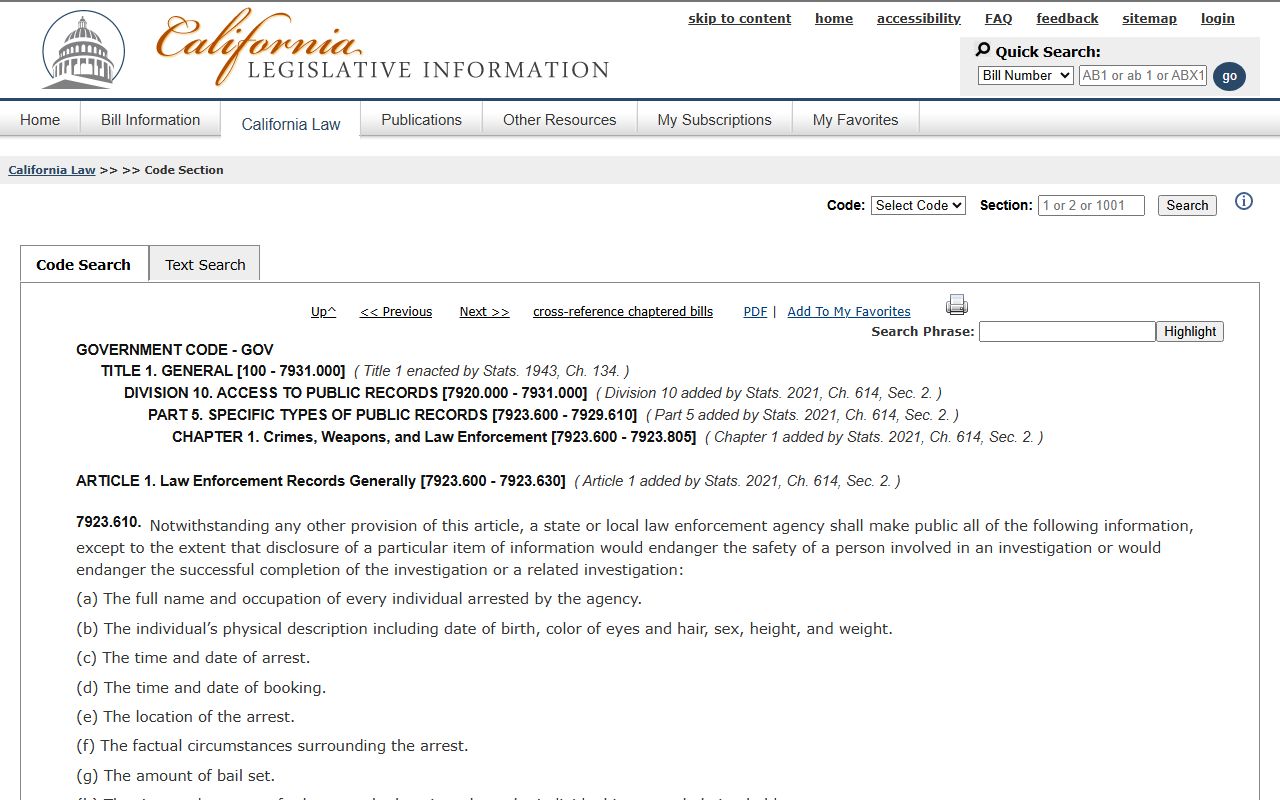
California law spells out what released inmate data must be shared with the public. Government Code 7923.610 requires law enforcement to make arrest and booking details available. The data includes the full name and date of birth of any person who was arrested. It also covers the time and date of arrest, time of booking, bail amount, all charges, and the time and way someone was released. An agency can hold back a piece of information only if sharing it would put a person at risk or harm an active investigation in California. This rule took effect on January 1, 2023, and applies to every state and local law enforcement agency in California.
The screenshot below shows the text of Government Code 7923.610 on the California Legislature's site, which lays out the specific released inmate data points that law enforcement agencies must make public.
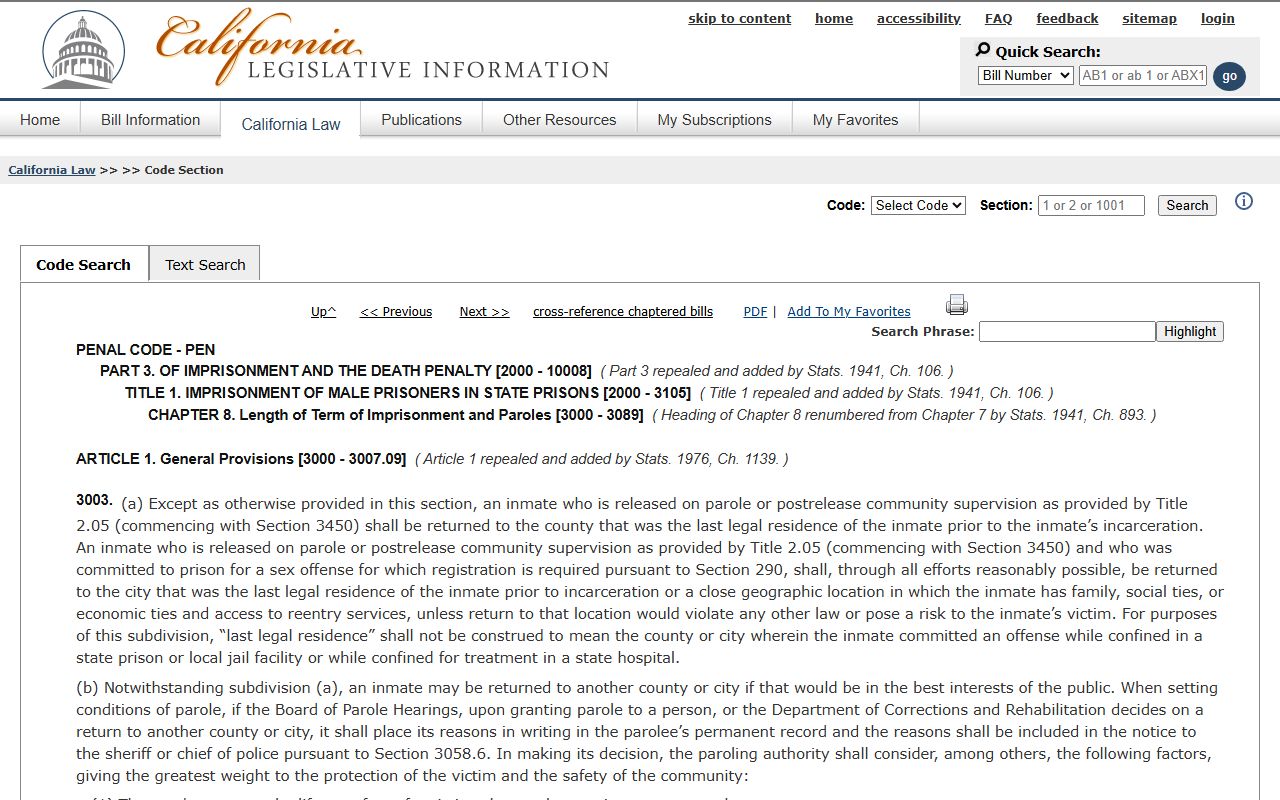
Beyond arrest data, Penal Code 3003 requires CDCR to give local law enforcement detailed information about parolees. This covers names, physical descriptions, tattoos, scars, offenses, and the address where a released inmate will live after leaving a California state prison. Parolees must return to the county where they lived before going to prison unless CDCR grants a transfer. Each released inmate gets $200 in release money and is taken to the nearest bus or train station if no one picks them up.
The California Legislature publishes the full text of Penal Code 3003, which governs parolee placement rules and the release of information about inmates leaving California state prisons.
Some records are protected. Government Code 7923.600 lets agencies withhold investigatory files compiled for law enforcement or correctional purposes in California. This means that while basic arrest, booking, and release data is public, detailed investigation files about a released inmate may not be available.
Board of Parole Hearings
The Board of Parole Hearings decides when certain California inmates can leave state prison. BPH conducts parole suitability hearings for people serving life sentences. It also reviews nonviolent offenders for early release. The board has 21 commissioners appointed by the Governor. Hearing schedules update every Thursday on the BPH hearing schedule page. Most hearings happen by video conference unless the board decides an in-person hearing is needed for a particular California released inmate case.
Hearing results are public. Visit the parole hearing results page to check outcomes for California inmates. A "Grant" means the inmate was found suitable for release to parole. A "Deny" means the board turned down the request. Other outcomes include Continue, Cancelled, Split, Postpone, and Waive. Grant decisions go through review by the board's Legal Division and the Governor's Office before they become final. The BPH main page has contact details and meeting agendas for anyone who wants to follow parole decisions in California.
After release, the Division of Adult Parole Operations manages parolees across California. DAPO uses GPS monitoring for some released inmates and maintains a wanted offenders list for sex offenders.
Public Records Requests in California
You have the right to request records about released inmates in California. The California Public Records Act covers both state and local agencies. CDCR handles requests through its Public Records Portal. The California Department of Justice uses a separate process. Agencies must respond within 10 calendar days of getting your request. They can take an extra 14 days if the request involves unusual circumstances. The DOJ charges 10 cents per page for copies. CDCR provides video footage through its portal at no charge. You can send requests by mail, email, fax, or phone if you prefer not to use the online system for California released inmate records.
The California DOJ PRA request page at oag.ca.gov lets you submit formal records requests for released inmate information and other public data held by the Department of Justice.
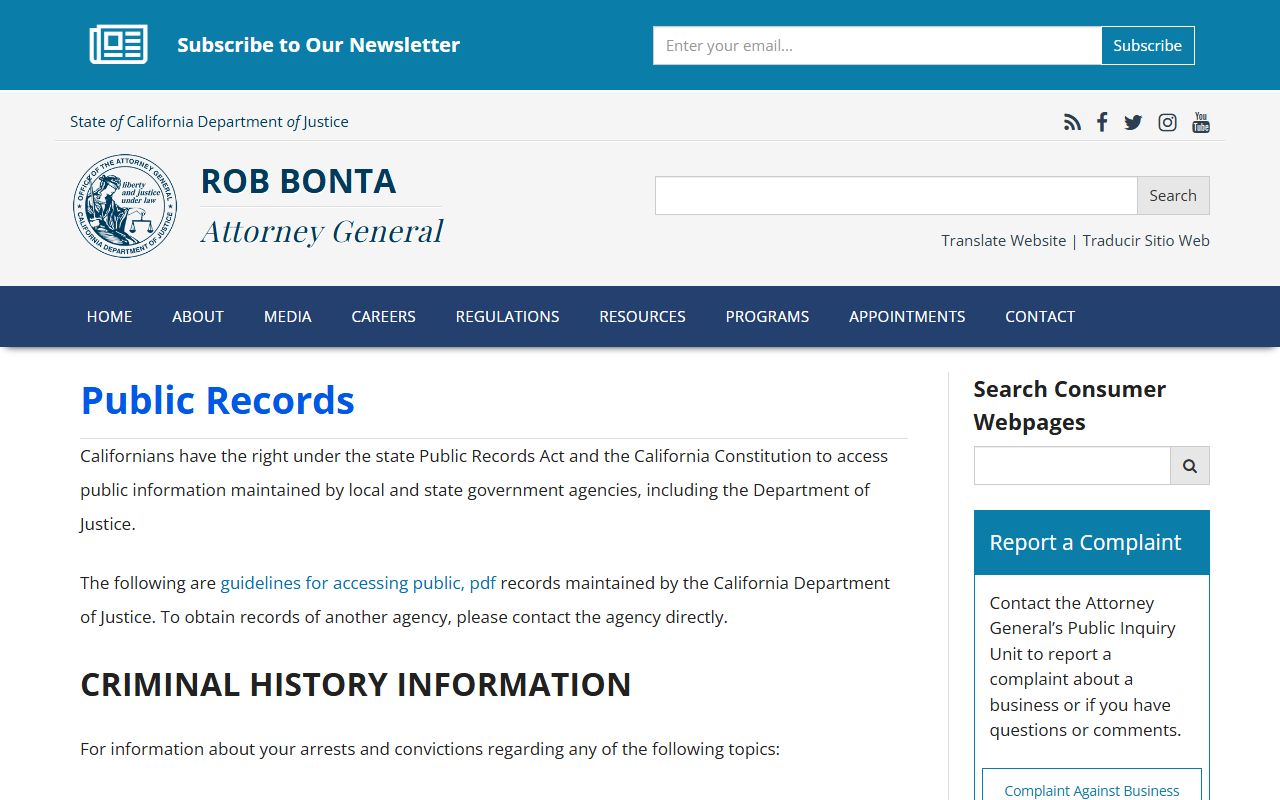
Keep in mind that the DOJ does not keep local court records. It maintains state-level criminal history data and handles requests related to its own files. For county-level records about released inmates in California, contact the relevant sheriff's office or county clerk directly.
Criminal Record Review in California
Individuals can request their own criminal history from the California Department of Justice. The DOJ keeps state summary criminal history information under Penal Code 11105. These records include arrest dates, booking numbers, charges, and case outcomes. To get a copy, you need to submit Live Scan fingerprints and pay a $25 processing fee. Normal processing takes 2 to 3 days. Some requests can take up to 2 weeks. The DOJ keeps criminal history records until a person turns 100 years old.
The DOJ criminal record review page at oag.ca.gov explains how California residents can get a copy of their own criminal history and challenge errors if any exist.
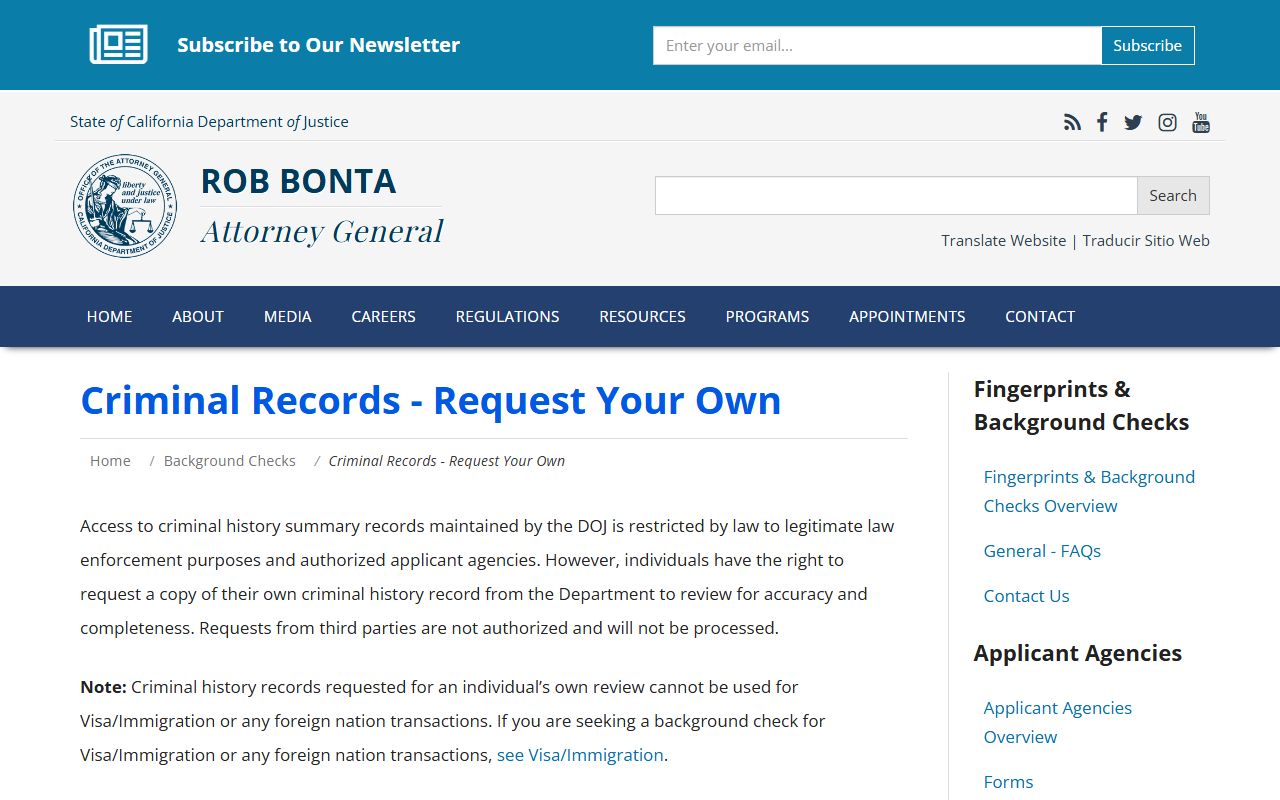
Third parties cannot request someone else's criminal history in California. Penal Code 11142 makes it a misdemeanor to share your record with an unauthorized person. If you find errors on your record, submit a challenge using Form BCIA 8706 after you receive your copy from the California DOJ.
California Sex Offender Registry
California tracks released sex offenders through Megan's Law. The site pulls data from the California Sex and Arson Registry. It shows offender names, photos, and addresses based on Penal Code 290.46. Not every registered offender appears on the site. The information is meant to help the public protect themselves and their families from released sex offenders in California.
The Megan's Law database at meganslaw.ca.gov is the public-facing search tool for finding registered sex offenders who have been released in California communities.
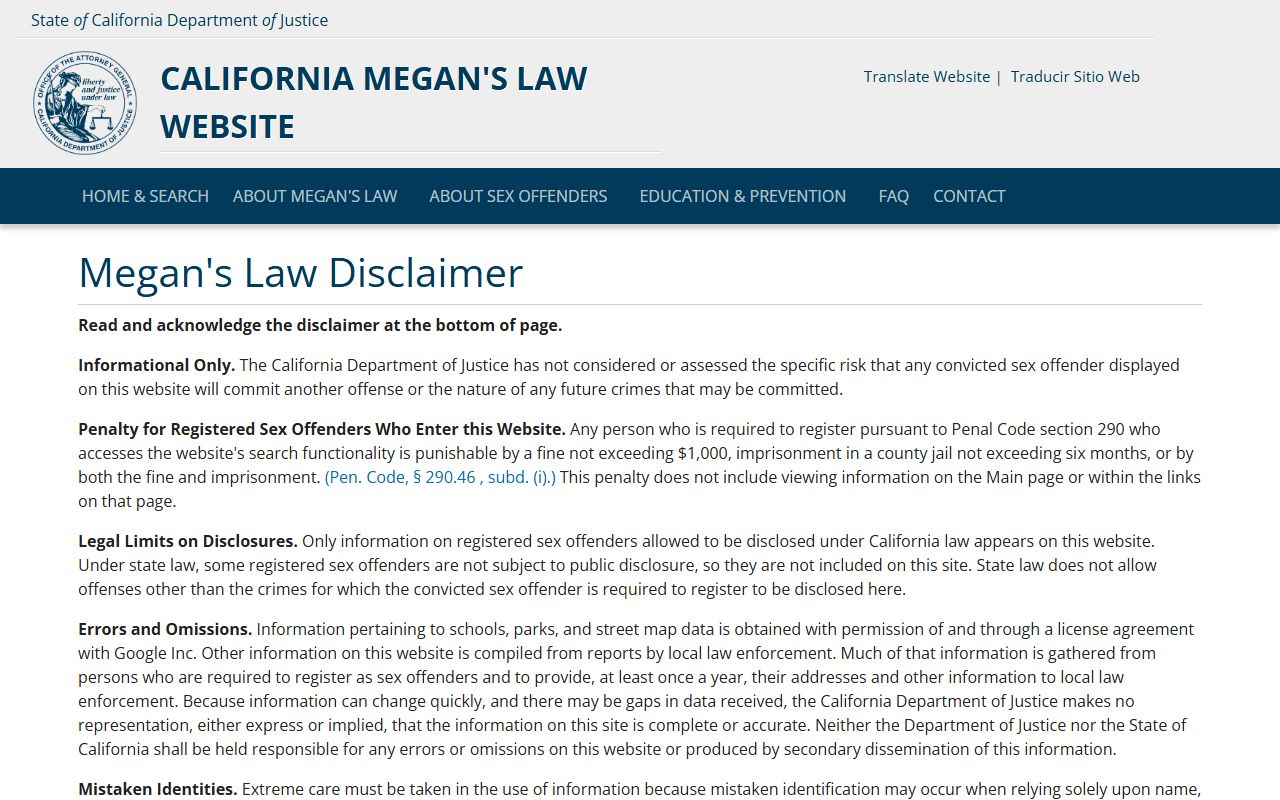
Using the data to harass an offender or their family is a crime under California law. Registered sex offenders who access the search tool face up to six months in jail and a $1,000 fine. Be careful with name searches. Mistaken identity can happen when you rely only on a name, age, and address. Report errors to MegansLaw@doj.ca.gov or contact your local police department in California.
Track Released Inmates With VINE
California's VINE system sends alerts when an inmate's custody status changes. You can sign up for phone calls, emails, or text messages. VINE is free. It runs around the clock in over 200 languages. The service covers jails and prisons across California and is available in 48 states total. It is the fastest way to find out when someone gets released from custody in California.
Call 1-877-411-5588 to register by phone. TTY users can call (866) 847-1298. You can also register online at vinelink.com. VINE covers roughly 2,900 facilities nationwide, including county jails and state prisons that hold California released inmates. Many California county sheriff offices recommend VINE as the primary way for victims and families to track custody changes for released inmates.
Browse California Released Inmates by County
Each California county sheriff runs its own jail and keeps booking and release records. Pick a county below to find local inmate search tools, contact info, and resources for released inmates in that area.
View All 58 California Counties
Released Inmates in Major California Cities
Most California city police departments do not operate their own jails. Arrested people are typically booked at the county jail. Pick a city below to learn how released inmate records work in that area of California.